Why Mother Tongue Matters in the Early Years
When a baby hears their mother’s voice, something powerful happens. Before they understand words, they understand tone, rhythm, and emotion. Language begins with connection.
In the early years, a child’s mother tongue (home language) is not just a way to communicate. It is the foundation of thinking, identity, learning, and emotional security.
For many families today, especially in urban India, there is pressure to focus only on English. But research clearly shows that strengthening the mother tongue in the early years actually supports stronger overall development, including English later.
How Mother Tongue Supports Development
- Understand concepts faster
- Ask more questions
- Express ideas more clearly
- Develop stronger problem-solving skills
- Children feel safe and connected
- Emotional bonds become stronger
- Children develop a secure identity
- Vocabulary knowledge transfers
- Grammar patterns transfer
- Storytelling skills transfer
1. Stronger Brain Development
Research shows that children learn best in a language they understand deeply. According to UNESCO, early education in the mother tongue improves comprehension, confidence, and cognitive development.
When children think in their home language, they:
Language is linked to thinking. If the foundation language is strong, learning becomes easier.
2. Better Emotional Security
Language carries love, culture, humour, and family stories. When parents speak in their mother tongue:
A child who feels secure learns better.
3. Easier Learning of Additional Languages
Many parents worry:
“If I speak my mother tongue, will my child struggle with English?”
Research says the opposite. According to American Academy of Pediatrics, strong skills in the first language help children transfer those skills when learning a second language.
This means:
A strong first language supports bilingual success.
4. Stronger Academic Outcomes
Studies across countries show that children who build literacy in their mother tongue perform better academically in the long term. World Bank reports that children taught in a familiar language in early years show better reading outcomes and higher school retention. Language is not just communication. It is access to learning.
How Parents Can Encourage Mother Tongue at Home
You do not need worksheets or special materials. Simple daily habits make a big difference.
- Listening skills
- Narrative skills
- Cultural identity
- “Why do you think that happened?”
- “What was your favourite part?”
- “How did you feel?”
- Encourage families to speak confidently in their home language
- Invite children to share words from their language in class
- Respect multilingual classrooms
- Focus on concept understanding, not just English output
- Guide parents about research-backed language development
- Belonging
- Thinking
- Confidence
- Culture
- Connection
1. Speak Naturally and Consistently
Speak in your strongest language. Do not mix or switch just because of pressure. Children need rich, full sentences.
Instead of:
“Eat fast.”
Try:
“Finish your food so we can go to the park together.”
2. Tell Stories from Your Childhood
Stories build vocabulary and imagination. Traditional stories, family stories, funny memories – all matter.
Storytelling strengthens:
3. Read Books in Your Mother Tongue
Reading in your mother tongue helps your child understand stories more deeply. When they fully understand the language, they can focus on the meaning, characters, and ideas — not just the words.
You can pause while reading, explain new words naturally, and ask simple questions like, “What do you think will happen next?”
If books are not easily available, oral storytelling works just as well. Sharing stories from your childhood or family traditions also builds vocabulary and imagination.
The goal is simple: give your child rich, meaningful language experiences.
4. Encourage Conversations, Not Just Instructions
Ask open-ended questions:
Conversations build thinking.
5. Celebrate Cultural Words
Some words do not translate perfectly, and that is beautiful. Keep those words alive. They carry culture and meaning.
But What About English?
English can be introduced gradually and meaningfully. The key is:
Strong first language → confident learner → smoother second language acquisition.
Children do not get confused by multiple languages. They are capable — when each language is given respect and richness.
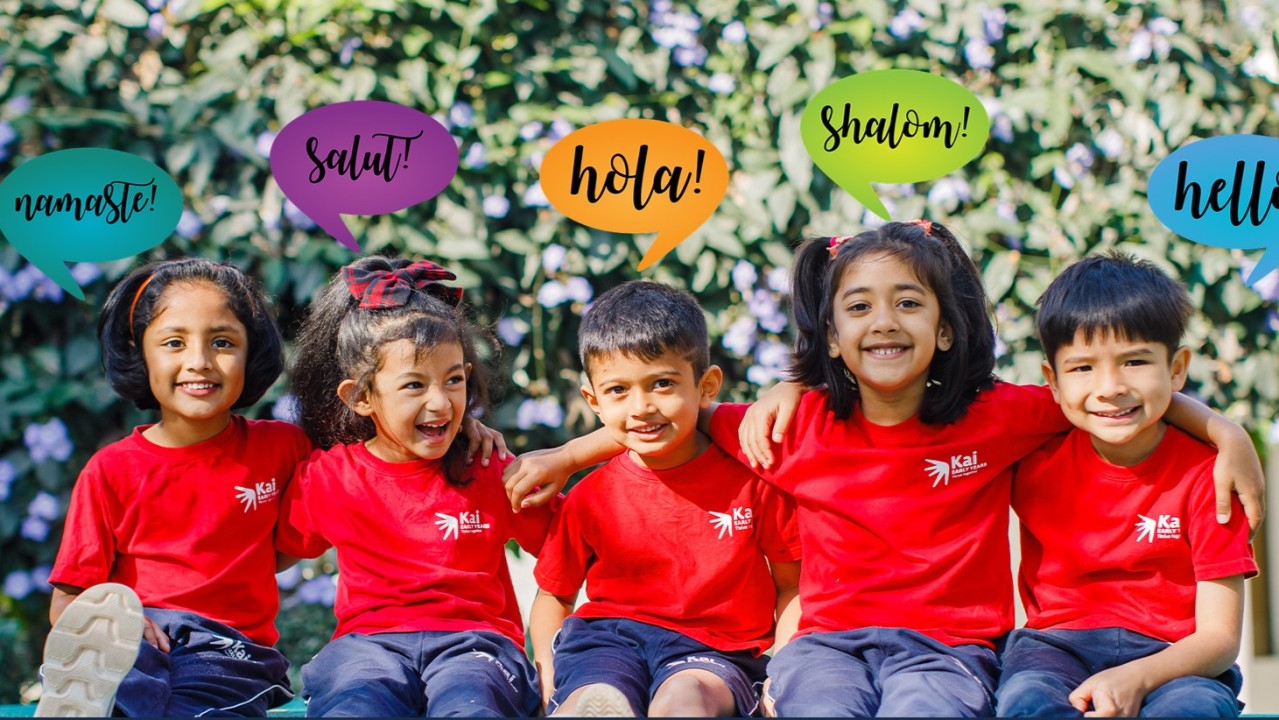
At Kai, we understand that language is identity.
We:
We believe children should never feel that their home language is “less important.” When a child walks into school carrying their language with pride, they walk in with confidence.
Mother tongue is not just about words.
It is about:
When we strengthen a child’s first language, we strengthen their foundation for life.
And that foundation stays with them, in every language they learn.