How Writing Should Be Approached in the Early Years: A Developmental Journey
When parents search for the best preschool near me, one of the biggest things they look for is writing readiness and how their child will be prepared for school.
Many adults assume writing begins when children start forming letters or holding a pencil correctly. But in the early years, writing is not something that should be rushed or forced. It is something that emerges naturally through movement, play, sensory exploration, and meaningful experiences.
Research in early childhood development shows that children build writing readiness through strong motor development, sensory engagement, and early symbolic expression (such as mark making), long before formal handwriting is introduced. Studies also highlight that fine motor control and handwriting success are closely linked to early physical development, play-based learning, and opportunities to explore writing in meaningful ways. This is why a developmental approach to writing leads to stronger long-term outcomes than rushing children into worksheets or formal writing too early. Writing is not a skill to be forced early; it is a process that emerges naturally as the child grows. When writing is approached the right way in the early years, children don’t just learn how to write, they grow to enjoy it.
Writing Begins With the Body, Not the Pencil
Before a child can control a pencil, their body must first develop stability, balance, and strength. Early writing readiness is built through gross motor development, because strong shoulders, a stable core, and good posture directly impact hand control and writing endurance.
This is why writing in the early years should begin with experiences such as:
- Climbing, crawling, balancing, pushing, pulling
- Carrying and lifting materials
- Obstacle courses and outdoor play
- Movement activities that build coordination and crossing the midline
These activities strengthen the foundation children need to sit upright, coordinate their hands, and build fine motor control. When this foundation is missed, children often struggle later with poor pencil grip, weak handwriting, and frustration.
Mark Making Must Be Valued as Real Writing
One of the most important stages of writing development is mark making. Those early scribbles are not random, they are meaningful. They represent a child’s first understanding that they can communicate through symbols and leave a message behind. This stage builds confidence, creativity, and expression, which is why it is essential in any high-quality early years programme.
Mark making should be encouraged through:
- Thick crayons, chalk, paintbrushes and rollers
- Vertical surfaces like easels and boards
- Sensory experiences like sand trays, water painting, clay and foam writing
- Role play opportunities like writing menus, signs, tickets and invitations
Children naturally develop hand-eye coordination, wrist control, and confidence through these playful experiences. For many parents searching for the best preschool near me, this stage is often overlooked, but it is one of the strongest indicators of a developmentally appropriate writing programme.
Letter Formation Should Come Only When Readiness Is Visible
Letter formation is a precise skill, and precision requires readiness. Children should not be introduced to formal writing simply because they are a certain age. Instead, they should be guided when they show signs such as:
- Improved finger strength and control
- Stable pencil grip beginning to emerge
- Ability to copy shapes and patterns
- Stronger visual tracking and coordination
- Curiosity about letters and sounds
When children are ready, letter formation should be introduced in a way that feels logical and natural – through patterns, strokes, and sensory reinforcement rather than repetitive worksheets.
At this stage, children benefit from:
- Tracing and pattern work
- Learning letters through stroke sequences
- Multi-sensory practice using touch, movement and sound
- Opportunities to practise without pressure
This approach supports both skill development and confidence.
Writing in Books Should Be a Gradual Transition
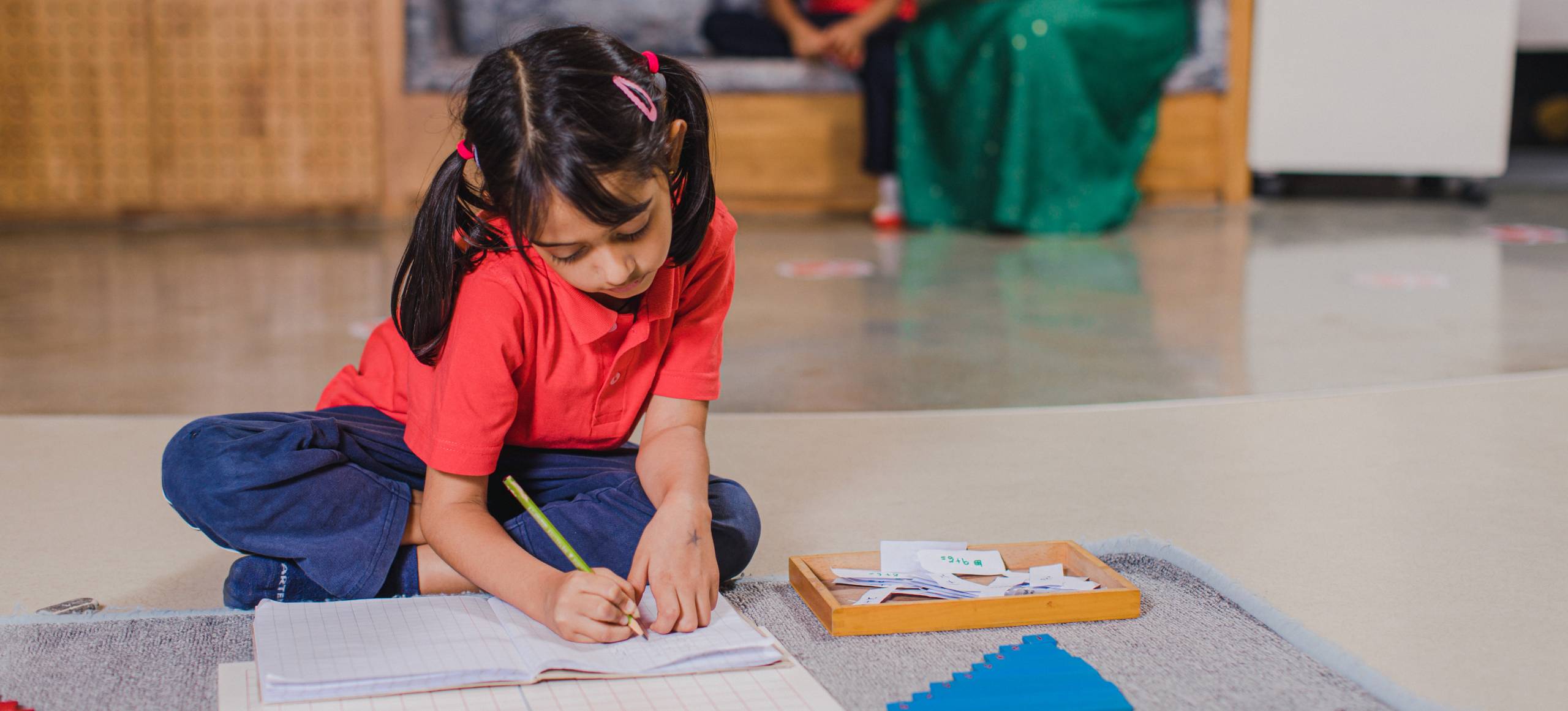
The final stage – writing in books, is where many children are pushed too quickly. Writing on paper requires more than knowing letters. It requires spacing, alignment, posture, pencil control, and stamina.
A healthy and respectful approach is always gradual:
- Blank pages before lined pages
- Wide lines before narrow lines
- Short writing bursts before longer tasks
- Words before sentences
- Guided writing before independent writing
When writing is introduced in a developmentally appropriate way, children begin to see writing as a tool for thinking and communication, not just a classroom task.
Why This Developmental Approach Matters
Many handwriting difficulties seen in older children are not academic issues; they are developmental gaps. When early writing is approached with patience and strong foundations, children naturally develop:
- Better fine motor control
- Stronger posture and pencil grip
- Clearer letter formation
- Improved confidence and independence
- Joy in expressing their ideas
Writing becomes something children want to do, not something they feel forced to do. This is exactly why parents searching for a preschool in Whitefield often look beyond academics and focus on how learning is introduced in the early years.
How Kai Early Years Is Supporting This Journey
At Kai Early Years, writing is approached as a natural developmental progression rather than a rushed academic milestone. Children are supported through purposeful movement, rich sensory mark-making experiences, Montessori-based pre-writing materials, and a gradual readiness-led introduction to letter formation and book writing. By blending Montessori foundations with inquiry-driven learning inspired by the IB philosophy, Kai ensures children develop writing confidence with joy, skill, and independence. For families looking for a high-quality preschool in Whitefield, Kai offers an approach where children are not pushed to write early, they are prepared to write well, in the way early learning is meant to be.